Twenty Years of Receipts, One Honest Line: What Studio 8's Own Ledger Says About the Price of a Building
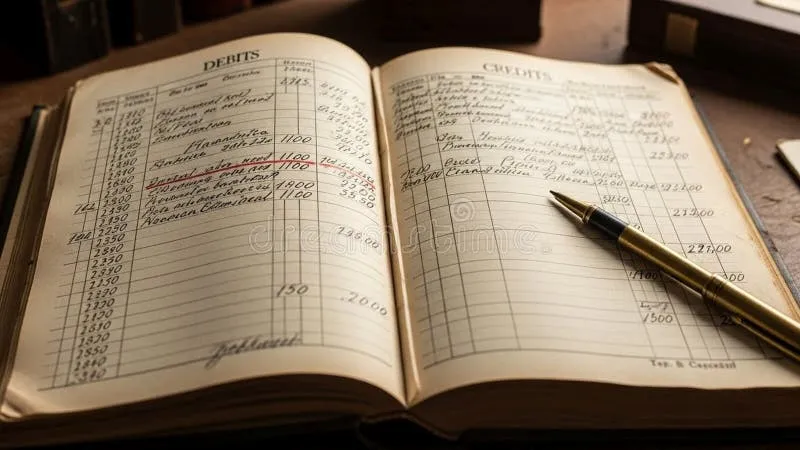
Photo: vintage accounting ledger book with handwritten entries and pencil on wooden desk, via thumbs.dreamstime.com
Every architecture studio keeps two sets of records. The first is public: the fee schedules, the contingency percentages, the polished cost estimates handed across conference tables with confident covers. The second is quieter — a shoebox of receipts, a column of numbers in a bound ledger, the small recurring charges that reveal what a practice actually is when nobody is watching.
Studio 8 has kept the second kind for twenty years. We recently opened the ledgers, and what they say about the true cost of a building surprised even us.
The Inventory of a Working Studio
Start with the unglamorous entries. In 2005, a gross of drafting pencils cost forty-one dollars; today, the same gross runs nearly triple, though we buy fewer because a single well-cared-for pencil outlives any stylus. Vellum, once purchased by the roll, is now rationed by the sheet. Shipping tubes for drawings — a line item most clients never consider — have quietly become one of our most consistent monthly expenses, a reminder that hand-drawn work must still travel physically across a continent.
Then there is the stationery that never appears in any project manual: the pencil sharpener replaced twice in two decades, the erasers consumed at a rate we can only describe as confessional, the blades for the model shop's mat cutter. These purchases do not show up in a construction budget. They show up in the drawings.
Where the Money Actually Goes
Read against the inflated line items of contemporary American construction — the value-engineering consultants, the software licenses, the coordination meetings that multiply like weeds — our ledgers suggest something almost embarrassing in their modesty. The materials of design, the physical apparatus of thinking by hand, amount to a rounding error on most project budgets.
What the receipts record instead is time. An invoice for paper is really a proxy for the forty hours spent on a single section drawing. A shipping tube is the cost of sending careful thought to a client in Portland or Providence. The ledger, read honestly, is not an accounting of things. It is an accounting of attention.
Transparency Begins at Home
We would never lecture a client about budget discipline from behind opaque books of our own. So the studio's practice is simple: every fee proposal we issue is accompanied by a plain-language breakdown of where our own hours go — drawing, thinking, redrawing, and yes, sharpening. Clients are often startled to learn that the most expensive item in a Studio 8 engagement is never a material. It is the deliberation.
This is not sentimentality about the analog. It is arithmetic. When a building in America overruns its budget — and most do — the overruns rarely trace back to the modest costs of design. They trace back to decisions made too quickly, alternatives never drawn, questions never asked on paper. The cheapest drawing is the one made before concrete is poured.
The Moral of the Shoebox
Twenty years of receipts have taught us to price our work the way a carpenter prices a joint: by the labor it truly contains, not the market will bear. The ledger and the line are the same document, kept in different inks. One records what we spent. The other records what we gave.
If American construction wants honesty in its budgets, it could do worse than begin in the studio's own shoebox — counting erasers, tubes, and hours, and telling the truth about all three.