Grip Before Gaze: The Small Hardware That Decides How a Building Feels
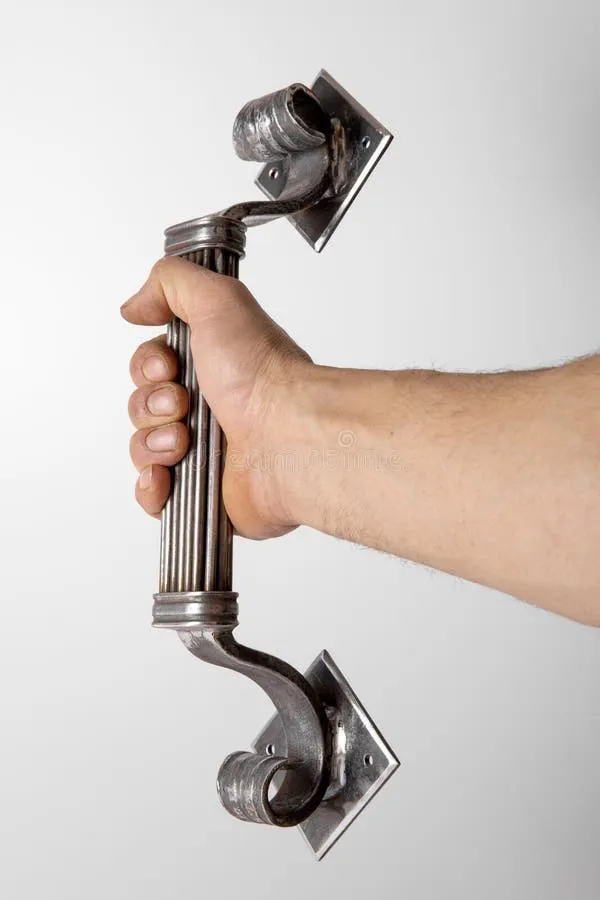
Photo: architect's hand gripping brass door handle detail, close-up, via thumbs.dreamstime.com
The First Four Ounces of a Building
There is a moment in every visit to a Studio 8 project that we care about more than the approach, more than the entry sequence, more even than the reveal of the main room. It is the moment a hand closes around the door pull. Four ounces of bronze, or white oak, or cast plaster — and yet the entire temperament of the building is compressed into that grip. A handle can promise warmth or warn of formality. It can suggest that the architect thought about you, specifically, or that you are simply passing through someone else's idea.
We have come to design the door before the façade, and the handle before the door. This is not a marketing flourish. It is a sequencing of attention, and it has changed how our office works.
Why the Elevation Lies
An elevation drawing is a portrait taken at a distance — flattering, composed, and slightly dishonest. It shows you a building the way a headshot shows you a person: the bones are there, but the handshake is missing. No drawing, however beautiful the linework, can tell you whether a threshold will feel generous at seven in the morning with cold fingers, or forgiving at the end of a long day when someone leans against it to gather themselves.
American clients, in our experience, intuit this. They may not be able to critique a cornice, but every one of them knows instantly when a door feels cheap. The hollow rattle of a mass-market lever set on a solid oak leaf is a small betrayal, and visitors register it before they register anything else. In a country where the front porch and the screen door carry so much cultural memory — the slap of a spring hinge in the South, the heavy craftsman pull in a Pasadena bungalow — the hardware is not a detail. It is dialect.
The Prototyping Table
Downstairs in our shop, between the model stock and the band saw, we keep what the studio calls the grip rail: a length of dowel mounted at door height, onto which every hardware prototype gets clamped for trial. Visitors are often puzzled by it. Staff are devoted to it.
The process is deliberately slow. A pull intended for a civic library in the Midwest went through eleven iterations — cast bronze first, then bronze over ash, then a shaped ash core with a bronze sleeve, which is what was built. Each version was handled by everyone in the office, then by the librarians themselves, some of whom open that door two hundred times a day. Their feedback had nothing to do with style and everything to do with the palm: a seam that caught a wedding ring, a profile that grew slippery when hands were wet from winter.
We prototype in three materials for a reason. Metal teaches you about temperature and weight — how a pull will feel in a Chicago January, and whether it will burn a child's hand in an Arizona summer. Wood teaches you about aging, because a handle is one of the few architectural elements that improves with the oils of a thousand hands. Plaster teaches you about shape alone, stripped of material seduction, so we can judge the geometry honestly before committing to the real thing.
Character at the Point of Contact
There is a useful American precedent for this obsession: the Shakers. Their handles, latches, and thumb-turns were not decorative afterthoughts but the distilled argument of the whole enterprise — utility made gracious through repetition and care. When we design a handle, we are really asking what the building believes. A residence might justify a pull that is soft-edged and slightly overscaled, an invitation you can feel. A courthouse owes its visitors something more ceremonial: a pull with a weight to it, so that opening the door feels like a small act of entry into public life.
The tactile threshold also disciplines us in ways a rendering never could. You cannot fake a handle. A façade can be styled; a grip must be true. If the detailing elsewhere in the project is lazy, the hardware will expose it — the misaligned latch, the door that fights its frame — in the first three seconds of a visit. Designing the handle first forces the rest of the building to be worthy of it.
What We Tell Clients
When we present a project, the hardware prototypes come to the meeting in a cloth roll, unrolled on the table like a surgeon's instruments. Clients pick them up. They always pick them up. And in that moment — a hand testing bronze against oak — the conversation shifts from abstract approval to genuine ownership. People rarely feel passionate about plan diagrams. They feel passionate about the thing they will touch every day.
Architecture is judged, in the end, not at the scale of the skyline but at the scale of the hand. We design the door before the façade because the door is where the building stops being a composition and becomes a welcome — or fails to. Get the four ounces right, and the four thousand square feet tend to follow.