What the Nose Knows Before the Eyes Arrive: Studio 8's Argument for the Sensory Section
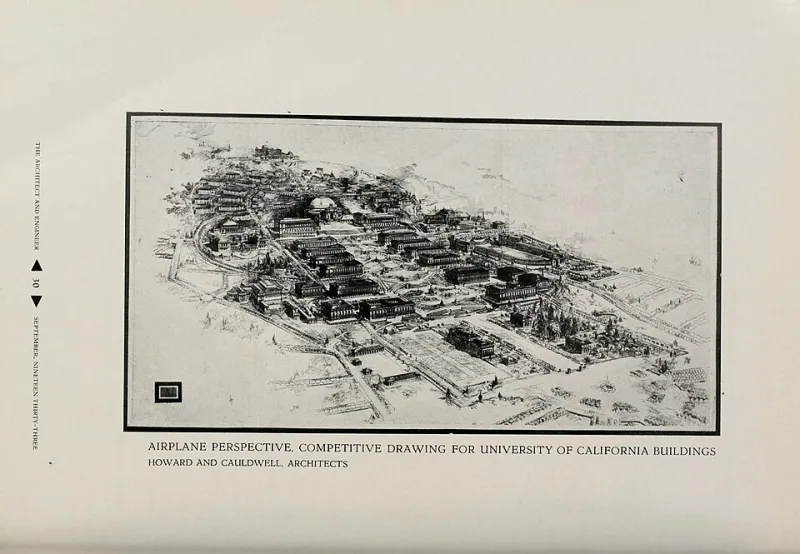
Photo: Internet Archive Book Images, No restrictions, via Wikimedia Commons
There is a moment in every completed building that no photograph has ever captured: the moment the door closes behind you and the air changes. The temperature drops two degrees. Something faintly of cedar, or damp concrete, or last night's cooking drifts in from somewhere you cannot see. The eye has not yet taken in a single detail, and already you have formed an opinion about this place that no rendering will ever talk you out of.
We design buildings as if that moment does not exist.
The Tyranny of the Elevation
American architectural culture optimizes almost exclusively for vision. Our fees are earned on plans and perspectives. Our awards juries review boards, not buildings. Our clients approve projects from images on screens—images in which nobody sweats, nothing smells, and every surface is a comfortable seventy-two degrees year-round. The photograph has become the client, and the photograph is a liar of omission.
The consequences are everywhere in American daily life. The airport concourse that is a wind tunnel in February and a convection oven in July. The suburban lobby that smells faintly of carpet glue for a decade. The public plaza paved in pale granite that radiates heat like a griddle by mid-afternoon in Phoenix, emptying itself of the very people it was built to gather. We did not fail these places visually. We failed them at the ankle, at the nostril, at the palm of the hand.
And yet ask anyone why they love a building and they will rarely mention the facade. They will mention the smell of the wood-paneled library in the rain. The cool brass of a banister in winter. The way the courthouse rotunda held a pocket of cold air that made you straighten your shoulders. The senses we forgot to charge for are precisely the senses doing the remembering.
The Sensory Section, Drawn by Hand
At Studio 8, we have begun requiring a drawing that no software produces well and no client has ever asked for: the sensory section. It is a sectional sketch through the building—not annotated with dimensions and assemblies, but with predictions. How will the lobby smell in August, when the doors have been propped and the magnolias outside are shedding? What will the doorknob feel like in a Chicago January, when bare skin meets metal at thirty degrees below? Where does the morning sun land on a bare forearm, and where does the HVAC draft find the back of a neck?
The drawing is done by hand because the hand is honest in a way the schedule is not. A computer model will happily simulate illumination to the candela; it has no opinion on the smell of rain on hot asphalt entering an open window. Those judgments must be made by a person, in ink, on a sheet that can be pinned up and argued over. The sensory section is a set of promises, and like all promises, it is more binding when written by hand.
Consider what the exercise surfaces. A west-facing glass wall in a Denver office tower looks handsome in elevation and vicious in section at four o'clock in September, when it will bake every desk behind it. A polished concrete floor reads as disciplined in plan and punishing underfoot in a Minneapolis waiting room, where people sit for hours and feet get cold. A fragrant courtyard planting is a delight in the landscape plan and, placed upwind of an intake vent, a headache in the mechanical section. None of these failures would survive a sensory review. All of them routinely survive a visual one.
Pricing the Unbillable
The obvious objection is contractual. We are paid to deliver drawings of things that can be built to specification, and one cannot specify a memory. But this objection holds less water than it appears to. We already make sensory decisions—we simply make them by default rather than by design. Every duct location is a temperature decision. Every finish schedule is a touch decision. Every vestibule depth is a smell decision. The choice is not whether to design for the nose and the palm; it is whether to do so deliberately or by accident.
There is precedent for taking the non-visual seriously. The best American hospitality work has always understood this—why else does every good hotel smell faintly the same way when you walk in, a signature engineered down to the diffuser? Restaurants guard their acoustics and their warmth with the ferocity of litigants. We have simply quarantined this knowledge inside one building type, when it belongs in all of them: schools, courthouses, bus stations, homes.
A Modest Proposal, in Ink
We are not suggesting that architects become perfumers. We are suggesting a single additional sheet per project, hand-drawn, presented to the client alongside the plans: a section through the building at the height of summer and the depths of winter, annotated with what a person standing there would feel, breathe, and touch. It costs a day. It changes decisions worth years.
And it changes the conversation with clients in a way nothing else has. When we showed a school board a sensory section of a proposed entry sequence—annotating the cold slab, the pine smell of the gym bleeding through the doors, the blast of January air at the threshold—the superintendent looked at it longer than she had looked at any rendering. "Nobody ever drew me how it feels," she said. That is the entire argument. Nobody ever does.
The buildings Americans love are not the ones that photograph well. They are the ones that smell like rain coming, that hold warmth at the small of your back, that feel like something under your hand. It is time we drew them that way.