Three Flights of Honesty: Why Studio 8 Holds Client Meetings on the Stairs
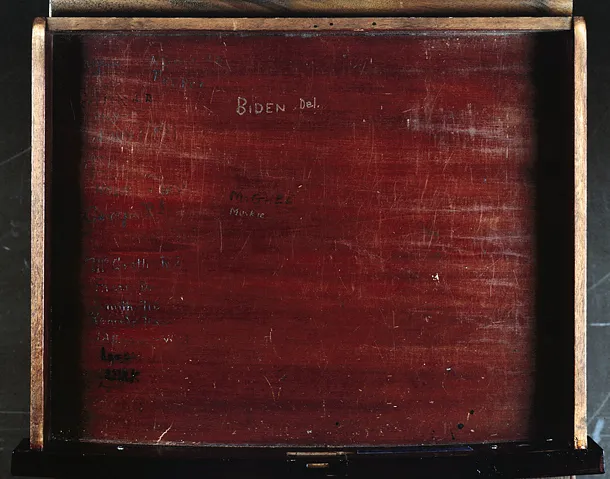
Photo: Chescargot, CC BY-SA 4.0, via Wikimedia Commons
The Meeting That Walks
There is a particular silence that occurs on the third flight of a stairwell, somewhere between the second landing and the top. Clients who have spoken confidently for forty minutes at a table will, somewhere on that flight, say the thing they actually came to say. At Studio 8, we have come to plan for that silence. We design our client meetings around it.
It began by accident, years ago, during a renovation consultation in a Brownstone in Brooklyn. The elevator was out of service, and our client — a museum registrar with strong opinions and a limited budget — used the climb to abandon her prepared remarks. By the second landing she was describing not the kitchen extension she had written three pages about, but the way her late father's house had made her feel watched, and how she wanted her own home to never do that. The brief we delivered bore no resemblance to her email thread. It was far better.
Architecture Happens Between Rooms
The premise is simple and, we believe, self-evident: buildings are not experienced standing still. No one lives in a floor plan. People live in the passage between rooms — the doorway, the landing, the turn at the top of the stairs where the light changes. Yet nearly every client meeting in American practice is conducted seated, in a room, in a chair, discussing a building as though it were a document.
We have come to consider this a category error. If a house is a sequence of movements, the conversation about that house should also move. When a client climbs, their body is doing what their future body will do in the building we design. They notice the darkness of the stairwell. They notice the handrail, or its absence. They arrive at the top slightly breathless and, more often than not, slightly more honest.
What the Landing Reveals
Over the years we have catalogued, informally, what stairwells produce that boardrooms do not.
Fatigue edits the wish list. By the third flight, clients begin to distinguish between what they want and what they want to maintain the effort of wanting. A couple planning an addition in Ann Arbor once abandoned their planned home theater on the second landing — not because we asked, but because climbing had made them honest about how they actually spend evenings.
Doorways force decisions. A conversation conducted passing through a threshold cannot meander indefinitely. The doorway is a natural deadline. We have watched clients resolve debates at a door frame that had stalled across four email exchanges.
The body votes before the mouth does. Hesitation at a steep stair, a hand reaching for a rail that isn't there, a pause to catch breath — these are data. No questionnaire captures what the climbing body tells you about the people who will inhabit your design.
A Practical Method, Not a Pose
We should be clear: this is not theater, and it is not a test. We do not schedule stair meetings to flatter ourselves as iconoclasts. For clients who cannot climb, we adapt — a slow walk down a corridor, a circuit of a parking structure, a standing conversation by a window. The principle is motion and passage, not elevation.
The method, for those who would borrow it:
- Choose a real building, ideally one the client knows. Their own workplace, their apartment building, a civic library they frequent. Familiarity loosens the tongue.
- Ask nothing on the stairs. The stairs are for listening. Questions come at the landings, where the body rests and the mind is mid-thought.
- End at a threshold. The best briefs in our experience have been written in the thirty seconds a client spends standing in a doorway, deciding how to leave a conversation.
For Those Hiring a Designer
If you are commissioning a home or a commercial project, we would offer this: be suspicious of any architect who never asks to see how you move through your current space. The walkthrough is not a courtesy; it is the brief. Bring your designer on your commute. Show them the corner of the kitchen where you always stop. Let them watch you hesitate at your own front door.
And if your architect suggests a meeting on the stairs, take the stairs. The building you end up with will know things about you that no questionnaire could have captured.
The Brief Between Rooms
Studio 8 remains, at its heart, a practice of the drawn line — but the line must begin somewhere, and increasingly ours begins in motion, on a landing, halfway between the rooms where a client's old life is and the rooms we will draw for their next one. The best briefs are written between rooms. We have simply stopped pretending otherwise.