Ink as Contract: The Hand-Drawn Sheet That Precedes Every Studio 8 Agreement
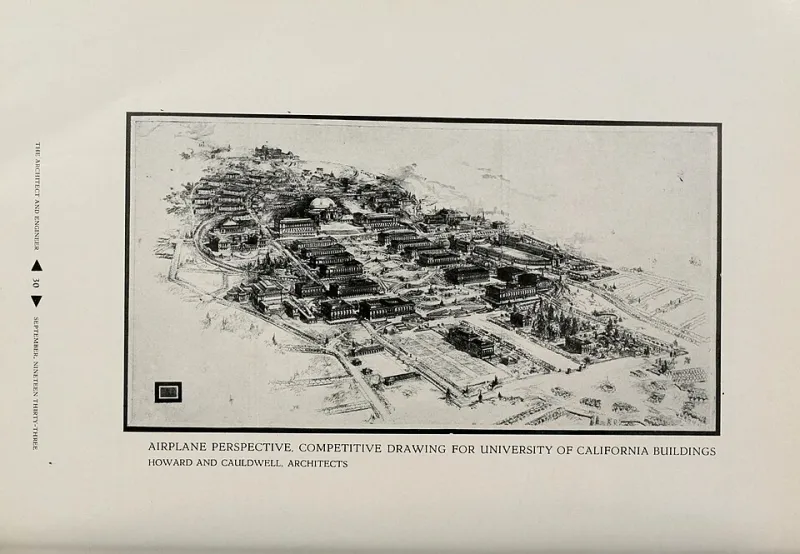
Photo: Internet Archive Book Images, No restrictions, via Wikimedia Commons
There is a moment in every Studio 8 commission that our clients remember long after they have forgotten the fee schedule. It arrives before the BIM model, before the survey, before the first invoice. A courier delivers a stiff board-backed envelope, and inside sits a single sheet of hot-press paper on which the project has been drawn — by hand, in ink, with the tremor and confidence that only a steel nib can produce.
We call it the first page of the contract, though our attorney in Chicago, who has reviewed more of these sheets than he initially cared to, calls it something less printable. He has come around. So have our clients. This piece is an attempt to explain why.
The Drawing as a Statement of Intent
A rendered image makes a promise the building cannot keep. It shows materials at their most flattering, light at its most cooperative, weather at its most absent. A hand drawing does something different: it confesses. The wobble in a line admits the presence of a person. The hatching that grows slightly denser toward a shadow line reveals a hand that has been thinking, not merely executing.
When C.J. Lim inks a section through a proposed house — a courtyard dwelling outside Santa Fe, a lakeside retreat in northern Michigan — the drawing becomes a shared reference point for what was discussed and what was understood. Clients sign the margin. We sign the margin. It is not legally binding in the way a rider to the standard AIA agreement is binding, but it is morally binding in a way those documents rarely achieve.
The sheet sets the register of the conversation. It says: we are serious enough to draw this slowly, and honest enough to show you our hand — literally.
What a Section Can Say That a Specification Cannot
Specifications are marvels of precision and wastelands of meaning. They describe a brick by its compressive strength and its salt efflorescence rating, and say nothing about how it will look at seven in the evening in October.
Some years ago, on an adaptive-reuse project in a former textile mill in Lowell, Massachusetts, a dispute arose — as they do — over the treatment of an existing timber floor. The developer's project manager read our specification and heard engineered patching throughout. Our contractor read it and heard selective repair. Both were defensible readings of the same text. The matter sat unresolved through three conference calls.
We responded not with a revised clause but with an inked section: a cut through the floor showing, in cross-hatch and annotation, exactly which boards would remain, which would be replaced, and where the new oak would meet the old pine. The drawing took an afternoon. The dispute ended in a single meeting. The developer kept the sheet pinned above his desk for the duration of construction.
A drawing, unlike a specification, cannot be parsed. It can only be read.
The Texture of Trust
Trust in American construction is a scarce material, and it is spent early. Clients arrive at an architect's door having heard the horror stories — the overruns, the change orders, the renderings that bore no resemblance to the finished building. The hand-drawn sheet answers those anxieties before they are voiced.
There is a texture to ink that no screen reproduces. The slight pooling where a line changes direction. The dry-brush drag at the end of a long stroke. Clients notice these things even if they cannot name them, and what they notice is evidence: of time, of attention, of a person who was present when this idea took shape.
We have found that clients who sign a drawn sheet argue differently later. They do not say, the rendering showed glass. They say, we agreed on this drawing. The object itself becomes the arbiter. It sits in a frame in a hallway, consulted like a deed.
A Practice With a Paper Trail
None of this is efficiency. A hand-drawn sheet costs us days that software would give back in hours. But Studio 8 was never organized around speed; it was organized around the conviction that architecture is a slow agreement between people, and that the instruments of that agreement should carry the evidence of a hand.
So the board-backed envelopes will keep leaving the studio. The nibs will keep scratching. And somewhere in the margins of those sheets, alongside two signatures, sits the most honest clause we know how to write.