Cardboard Confessions: Inside the Model Shop Where Studio 8 Thinks With Its Hands
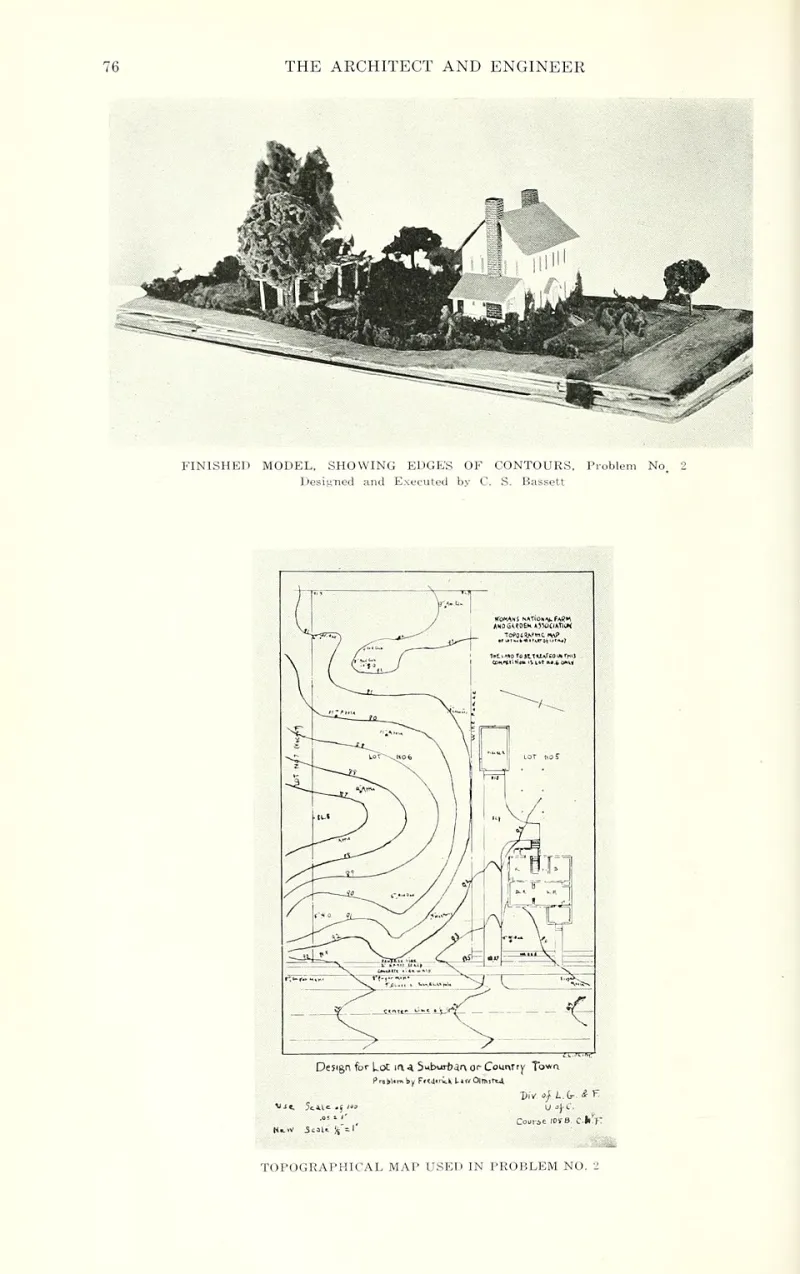
Photo: Internet Archive Book Images, No restrictions, via Wikimedia Commons
Visitors to the studio often remark on the shelves. They line the north wall from floor to ceiling, crowded with white cardboard volumes of every scale — towers, courtyards, a hillside village rendered in strips of museum board. Some are pristine; others bear the scuffs of a hundred revisions. Almost none of them correspond to buildings that were ever constructed.
That is precisely the point.
The Model Comes First
At Studio 8, the physical model is not an illustration of an idea. It is the idea's earliest, most argumentative form. Before a plan is drawn, before a section is considered, we build. A sheet of cardstock, a steel ruler, a fresh blade — these are the first instruments of design, and they impose a discipline no software can replicate.
Paper has opinions. Cut a wall too thin and it bows. Stack a massing too ambitiously and the whole thing slumps by afternoon. The material negotiates with you, and in that negotiation, a design finds its logic.
One Project, Three Models
Consider a civic pavilion we developed for a Midwestern riverfront — a project that remains unbuilt, but which shaped our thinking for years afterward.
The first model took forty minutes. It was crude: four slabs of gray chipboard held together with masking tape, roughly suggesting a raised hall and a sunken court. It was ugly, and it was indispensable. Within an hour of setting it on the table, we understood that the roof plane was fighting the ground plane, that the entry sequence felt like a corridor rather than a threshold. No plan drawing had revealed this. The object did, immediately, and to everyone in the room at once.
The second model introduced balsa and a proper facade. Here we discovered the opposite problem — the design had become fussy. Small openings, fiddly fins, a roof that performed acrobatics it couldn't structurally justify. Balsa is forgiving enough to permit indulgence and stiff enough to expose it. We cut the ornament away.
The third model was the presentation piece: white card, sanded edges, a base of stained ply with the river suggested in a single swept plane of blue-gray paper. Clients respond to models like this differently than to renderings. They walk around them. They crouch. They point at a corner and ask what happens there — a question a static image rarely provokes.
Why Paper in a Rendering Age
The American practice landscape runs on photorealistic visualization. There is real value in that, and we use those tools. But a rendering answers questions before they are asked. It flatters. A rough chipboard model does the reverse: it strips a scheme down to mass, light, and proportion, and it cannot hide a weak idea behind a convincing sky.
Hand-cut paper also keeps the studio honest in a subtler way. It slows the loop between thought and test to something human. The distance from a doubt to a new model is one afternoon, not one workflow. Decisions get made in conversation around a table, with the object between us, rather than in the solitary glow of a monitor.
There is a final, practical benefit. Models are social objects. A client's grandmother can read a paper model. A five-year-old can read a paper model. Architecture that can be understood by hand and eye, at table height, tends to be architecture worth building.
The Shelf Keeps Growing
The riverfront pavilion was never realized. Its three models sit on our shelves regardless, wedged between a housing block for Denver and a library study for New England. Unbuilt work is not wasted work; it is the studio's accumulated vocabulary.
We will keep drawing, of course. But the first draft here will remain what it has always been: a blade, a ruler, a sheet of card, and the willingness to be told by the material that we are wrong.