Designing the Back of the City First: Studio 8 on the Quiet Rehabilitation of the American Alley
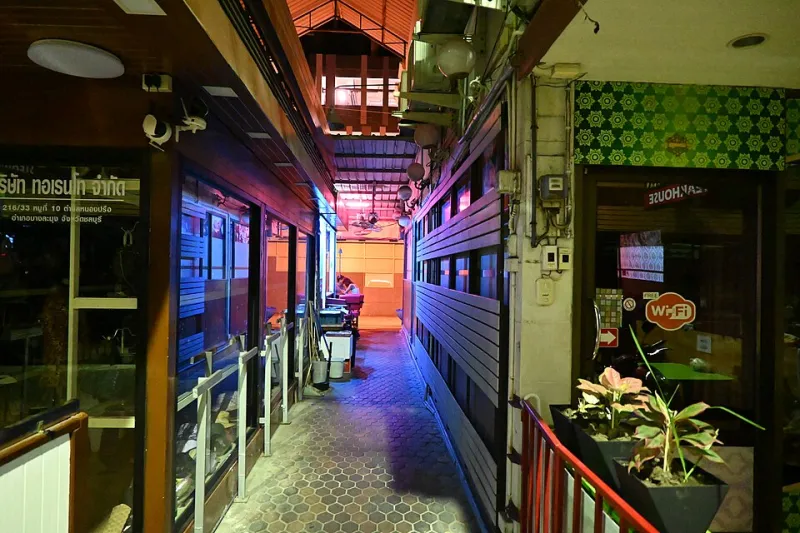
Photo: PattayaPatrol, CC BY-SA 4.0, via Wikimedia Commons
There is a particular embarrassment in the American alley. It is the part of the plan we label rather than design — a 20-foot sliver of asphalt reserved for dumpsters, grease bins, and the mechanical guts of a building. In the drawings we present to clients, it is hatched gray and left unmentioned. In the cities we build, it is treated as a debt to be serviced rather than an asset to be shaped.
At Studio 8, we have spent the past several years reversing that habit, and the exercise has changed how we think about urban ground floor by ground floor. The alley, we have come to believe, is not the back of the city. It is the city's second face — and in three American cities, we have watched that face smile.
What the Service Lane Remembers
Alleys are older than zoning and more honest than most planning documents. Chicago's grid alone contains more than 1,900 miles of them, a sub-network woven in the nineteenth century to keep coal deliveries, ash removal, and horse traffic away from the parlor entrance. Seattle's Pioneer Square and Austin's warehouse districts carry the same logic: the alley was the city's circulatory system before anyone thought to call it infrastructure.
Then the automobile arrived, and the alley lost its job. Garbage collection moved to the curb; deliveries moved to the loading dock; the lane became a place where buildings turned their backs. An entire century of architecture learned to design a handsome front and apologize for the rear.
The consequence is that most American alleys now reveal a city's true priorities with uncomfortable clarity. Walk one and you will learn precisely how much a municipality values stormwater, shade, sanitation, and the people who work after dark. The alley is a ledger, and for decades the entries have been grim.
Three Cities, Three Second Chances
Chicago's Green Alleys program is the most systematic of the efforts we have studied. Since 2007, the city has repaved service lanes with permeable and reflective materials — alley after alley redesigned to absorb stormwater instead of exporting it to overloaded sewers. It is unglamorous work, and it is exactly the kind that precedes everything else. A dry, cool, well-lit alley is a prerequisite for any alley that people might actually enjoy.
Seattle took a different route. In the Chinatown–International District and along Pioneer Square, activists and designers opened the lanes to café seating, lighting, and public art through a formal permitting process — the aptly named Alley Activations. What was a delivery corridor at noon becomes a dining room by evening, and the buildings along it discover they have had a second façade all along.
Austin's contribution is looser and more entrepreneurial. In the Rainey Street district and around East 6th, bar owners and small developers have treated the alley not as a service requirement but as the social spine of the block — string lights, native planting, murals, and the understanding that a well-tended back door can outperform a neglected front one.
Three cities, three climates, three regulatory cultures — and the same underlying discovery: the alley rewards attention disproportionately to its size.
Drawing the Alley First
Our own practice has adopted a simple discipline in response. On urban infill projects, we now draft the service lane before we finalize the street elevation. The reasoning is practical as much as philosophical. The alley is where the building meets its obligations — waste, loading, utilities, drainage, fire access — and a design that resolves these gracefully on the first pass will almost always produce a better street as well.
In one recent mixed-use study, we began with the lane: a permeable paving field, a continuous planting trench, service bays screened by trellised vines, and lighting calibrated for a delivery worker at 5 a.m. rather than a passerby at dusk. Once those decisions were made, the ground-floor plan organized itself. The residential lobby moved to the corner; the restaurant's kitchen opened generously to the rear; the alley gained tables where it had only had pallets.
For developers and designers considering a similar reversal, we offer a modest framework — four questions, asked in order:
- Who works in this lane, and when? Design for the sanitation crew and the line cook before the flâneur.
- Where does the water go? Drainage is the alley's founding problem; solve it and half the design is done.
- What does the rear façade owe the lane? A blank wall is a choice, not a condition.
- Can the lane earn a second life after hours? If lighting and level thresholds allow it, the public realm doubles for free.
A Measure of a City's Intent
We remain, by temperament, a studio that draws by hand, and there is something clarifying about sketching an alley at 1:50 scale. The pencil slows down. You notice the downspout, the dumpster pad, the service door that a resident will use every day for thirty years. These are not glamorous lines, but they are the lines a city is actually made of.
The American alley is having its quiet rehabilitation, and architecture should not arrive late to it. The next time a plan crosses your desk, look first at the gray sliver between the parcels. It will tell you, more reliably than any rendering, what the project — and the city — truly values.