Sketching the Vanishing Threshold: Notes on America's Porch
Photo: Federal Bureau of Investigation, Public domain, via Wikimedia Commons
A Room Made of Weather
The porch is the only room in the American house whose principal material is climate. Its walls are made of shade, its ceiling of sky, its furniture of whatever chair survived last winter. For two centuries it mediated between the private interior and the public street — a threshold soft enough that a neighbor could pause, a conversation could begin, and neither party had committed to hospitality's full ceremony of the parlor.
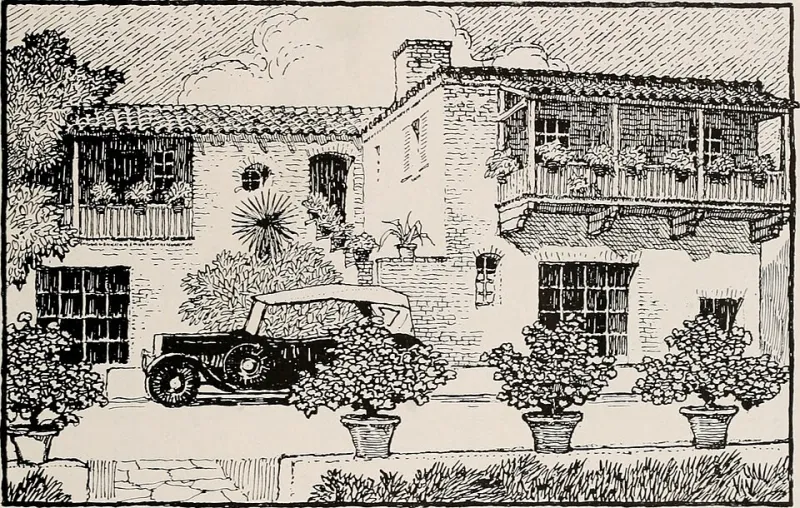
Last spring I carried a sketchbook through four states to draw what remains of it. What follows are field notes, paired with the sketches that occasioned them.
New Orleans: The Shotgun Gallery
In the Bywater, the shotgun houses lean their galleries toward the street like people leaning over a fence. Drawing a gallery is an exercise in layering: column, railing, shutter, door casing, each a rhythm of verticals against the long horizontal of the roofline. The sketch teaches what the photograph cannot — that the gallery is not decoration but infrastructure for conversation. Sit long enough with your pen and someone on the sidewalk will speak to you. That, precisely, is the instrument's function.
Ohio: The Bungalow's Broad Lap
The Midwestern bungalow porch is a different creature: deep, shingled, generous enough for a swing and a radio. In Columbus and Dayton I found them mostly intact, but mostly empty — preserved as façades, unused as rooms. The sketchbook reveals why: the porch still faces the street, but the street no longer offers anything to face. Garages front the alleys; living rooms turn inward toward televisions. The room survives; the society it served has migrated.
Why the Porch Disappeared
Historians offer the usual suspects: air conditioning, the automobile, the television, the retreat into private backyard life. All true. But I would add an architectural cause — the porch required a certain density of passerby to justify its existence, and postwar subdivision design eliminated the passerby. A threshold with no one to threshold becomes a liability, then an anachronism, then a removal.
Drawing It Back
Can contemporary architecture recover this instrument? I believe so, if we stop treating the porch as heritage trim and start treating it as social technology. The conditions are drawable: a depth of at least eight feet so a chair can truly sit there; a partial enclosure so occupants feel observed only gently; a front yard that belongs to the pedestrian rather than the mower; a street worth watching.
At Studio 8, we have begun specifying what we call the working porch on every residential commission — not a token stoop, but a genuine room of weather. Clients sometimes resist until they sit in one on a September evening. Then they understand what the shotgun houses of New Orleans always knew: the most important room in the American house may be the one with no roof but the sky's.