First, the Fence: Five Houses Designed Backward From the Property Line
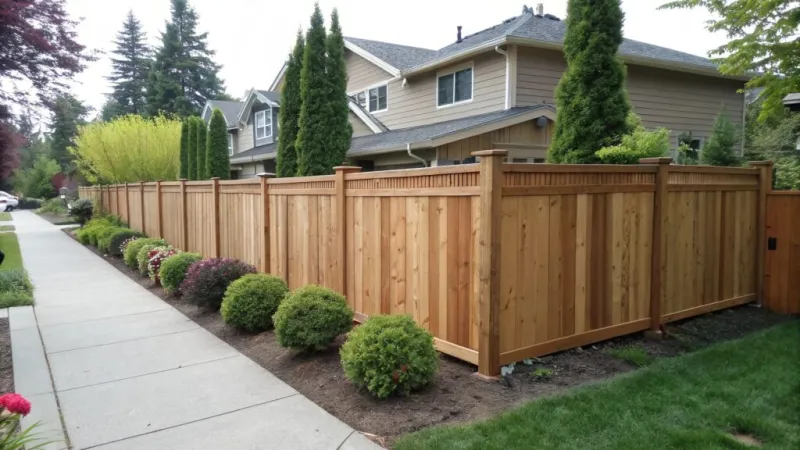
Photo: wooden fence boundary suburban backyard property line, via inline-fence.com
Ask most homeowners what they love about their house and they will describe a room. Ask them what they love about their home and, more often than not, they describe the edge of it: the deck rail at dusk, the shadow of a neighbor's maple, the exact spot where the lawn gives up and the alley begins.
We have come to design residentially from that observation. In five projects across the past decade, Studio 8 began not with a plan but with a walk of the perimeter — and in each case, the boundary wrote the house.
1. The Corner Lot That Wanted Two Faces — Portland, Oregon
A corner parcel in a gridded neighborhood presented a dilemma every American planner will recognize: which street does the house address? Our first sketch was not of rooms but of edges — a heavy pencil line tracing both street frontages, then a lighter line for the shared fence with the neighbor to the east. The house that emerged has two personalities: a composed, nearly opaque face to the busier arterial, and a porch-forward, gregarious one to the quiet side street. The fence line, drawn first, taught us where privacy could be spent and where generosity was owed.
2. The Oak That Set the Party Wall — Austin, Texas
The heritage live oak stood eight feet from the side setback, its canopy covering half the lot. Any plan-first approach would have treated the tree as an obstacle to route around. Instead, we drew the canopy's drip line as the primary diagram and asked the house to fit inside it. The result is a long, low bar of a house that lives almost entirely in shade, its principal rooms opening to dappled light rather than a blazing southern exposure. In a Texas summer, the fence line and the tree line were the same line — and the client's cooling bills confirm the wisdom of starting there.
3. The Zero-Lot-Line Rowhouse — Washington, D.C.
On a narrow District lot, the party walls are the architecture. There is no romantic distance from the boundary; the boundary is the wall. Our sketch began as a single dark band — the legal limit of construction — and the entire house became a negotiation with that band: where to press against it for structure, where to pull away for light wells and a rear court. The lesson was almost legal in nature. Setbacks, easements, and rights-of-way are not constraints applied to design afterward; read carefully, they are the design.
4. The Fence as social Contract — Marin County, California
A hillside site with sweeping views tempted us, as it tempts every architect, to point every window outward. But the boundary sketch told a different story. The lower fence line was shared with a neighbor who had lived on her parcel for forty years, and her garden spilled, generously and informally, across the divide. Rather than a six-foot privacy barrier, we proposed a low split-rail edge and a shared gate. The house's plan followed: its kitchen and terrace orient toward that permeable edge, not the postcard view. The view is there when you want it. The neighbor is there when you need her.
5. The Alley That Became a Garden Street — Minneapolis, Minnesota
The humblest boundary on any American lot is the rear alley, and the humblest sketch of the five was ours for this project: a rectangle with a single dashed line along the north edge. That dashed line was the alley. By treating it as a garden street rather than a service scar — planting the rear setback densely, turning the garage door into a trellised entry — we reversed the social gravity of the lot. The frontage became calm and semi-private; the rear became the lively, communal face. Guests now arrive, unprompted, from the alley.
What the Edge Knows
A floor plan is an invention; a property line is a fact. It carries law, neighborliness, climate, trees, and time — everything a house must actually live with. Sketching the boundary first does not slow the design down. It grounds the design in the one drawing that was made before anyone arrived, and that will remain after everyone has gone.